Chapter 2 · From College to the Hospital
What Medical School Doesn't Teach You About Residency, Debt and Your First Year
From the MCAT to the first night with no attending in the room — what training leaves out, and why a new doctor is already a business.
Chapter 2 follows the long road from a college classroom to a hospital badge, and it does not pretend the road is gentle. Good grades in high school, four years of college, the MCAT — which Dr. Siddiqui calls the hardest exam he ever sat — then four more years of medical school and a residency match he compares to a sports draft. In his own case that meant three years of internal medicine with Michigan State University, three more in cardiology, and then interventional cardiology, a field so small and competitive that he measures it against the rosters of professional football.
Why put people through what he calls a mental meat grinder? Because a doctor can never be allowed to freeze. Television, novels and video games let the story stop when it gets hard. Medicine doesn't. His professors had already seen what was coming, and the training was built to make sure their students had too.
Medical school life and what to expect in residency
The chapter's first lesson is humility: you don't know what you don't know, and that is acceptable as long as you know how to find out fast. In residency, he explains, an attending physician is still looking over your shoulder. That safety net is what lets a trainee be bold — and it disappears the day training ends.
He illustrates the stakes with a block of Swiss cheese. Slice it, stack it back up, and the holes never line up again. Some patients arrive like that, shaped by so many doctors, tests and treatments that they can never quite be made whole, and every new specialist adds another slice. At the top of that referral ladder sits the "super-specialist," the last line of defense. There is no one further up to call, and he is frank that the emotional weight of that role is not for everyone.
His most vivid story comes from his interventional fellowship at the University of Utah. Two heart-attack patients arrived within minutes of each other. Determined to treat both, the young fellow pulled a stunt that bought him precious minutes — and his attending, rather than reprimanding him, told him he had done well and knew exactly what he had done. Months later the same scenario played out again, this time with no one behind him. That, he says, is the real gap between training and practice: the surprise you cannot rehearse.
From a patient's eyes
Dr. Siddiqui also turns the lens around. The next time you sit for hours in a waiting room, he suggests, remember that doctors are still learning too. Much of medicine is not in a textbook, and the public now reads much of the same information online that physicians do. A doctor's answer rests on two things — experience and reading — and it is offered as an opinion for the patient to weigh, not an order. A student does not know what a twenty-year attending knows, and every year in practice adds a little more.
"When you chase money, the money runs. You need to chase what you are happy with and enjoy doing"Chapter 2, The Dark Side of Medicine
Know your dollar signs: medical school debt and the lifestyle trap
Here the book's business theme returns. To a hospital system, he argues, a new doctor is a revenue line on a spreadsheet — a badge number with a dollar figure attached. His advice to the "rookies" is to understand that before anyone else does: you are your own business, and you should learn how you are valued.
Patients, meanwhile, often imagine their doctor driving off to a lake house, unaware that the physician in front of them may owe more than they do after years of college and medical-school tuition. The danger, in his view, comes next: the new attending who feels obliged to look the part, with the big house and the fast car. He calls it the same hamster wheel patients fall into, and his remedy is plain. Skip the depreciating car, favor assets that can grow in value, and spend fifteen minutes learning how a mortgage and its interest actually work. Avoid the lifestyle, he warns, because its real name is debt.
Life as a new doctor: alone in the Serengeti
Finishing residency, he writes, means leaving a small, protected world full of competitive "alphas" for a much larger one. A doctor who goes out on his own may find hospital systems and established groups treating him as competition, and he describes feeling like prey on the open savannah until you have been attacked and survived once. He also observes that today's residents work fewer hours than he did, which leaves them with less hands-on experience. His answer is ABL — Always Be Learning: read about disease processes, new treatments and how to refer patients well, and keep fifteen to thirty minutes a day for reading unrelated to medicine so the mind can rest.
Above all, he urges new doctors to stay in the field for the right reasons. He has met plenty of physicians who stopped caring about learning and work only to pay down their loans, and he does not want readers to become one of them.
Ideas to take away
- Residency gives you a safety net. Use it to learn as much as you can before it is gone.
- "I don't know" is never the answer in medicine; knowing who to ask is.
- A hospital sees a new doctor as revenue. Understand your own value before you sign anything.
- Medical school debt plus a doctor's lifestyle is a trap. Learn how loans and mortgages really work.
- Always Be Learning, and choose the work you enjoy over the work that only pays.
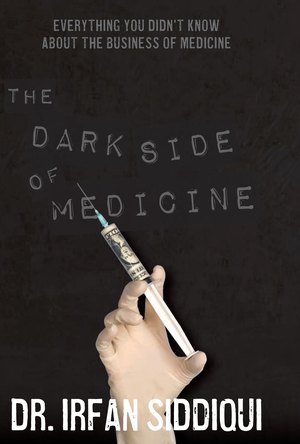
This is a summary. The full chapter — with the numbers, the stories and the step-by-step thinking — is in the book.
Buy The Dark Side of MedicineThis companion summarizes the author's views and experience. It is not medical, legal or financial advice.